Beyond Biomedical Research, onto the AI Agent Stage: PseudoCon 2026
Hi, I’m Kakyung Kim, a data analyst at a biotech company.
On July 25, 2026, I presented at PseudoCon 2026 as part of the AutoBioX team. It was the first time we brought four months of research — two projects running in parallel — to a public stage. One on single-cell multiomics, one on pathology image analysis.
I’ve given a lot of presentations over the years: conferences, seminars, internal project reviews. But this one felt different. It was the first time I talked about the results of an AI agent research team I started myself, in front of an AI and tech community outside of biomedical circles. And more than anything, it wasn’t a presentation of polished results — it was a presentation that included failures and false starts, left in.
PseudoCon is the annual conference of PseudoLab (가짜연구소), a Korean AI and ML research community. This year marked the 10th edition, held at Sookmyung Women’s University with around 300 attendees. Sessions kept running over as audiences pulled speakers into extended Q&A.
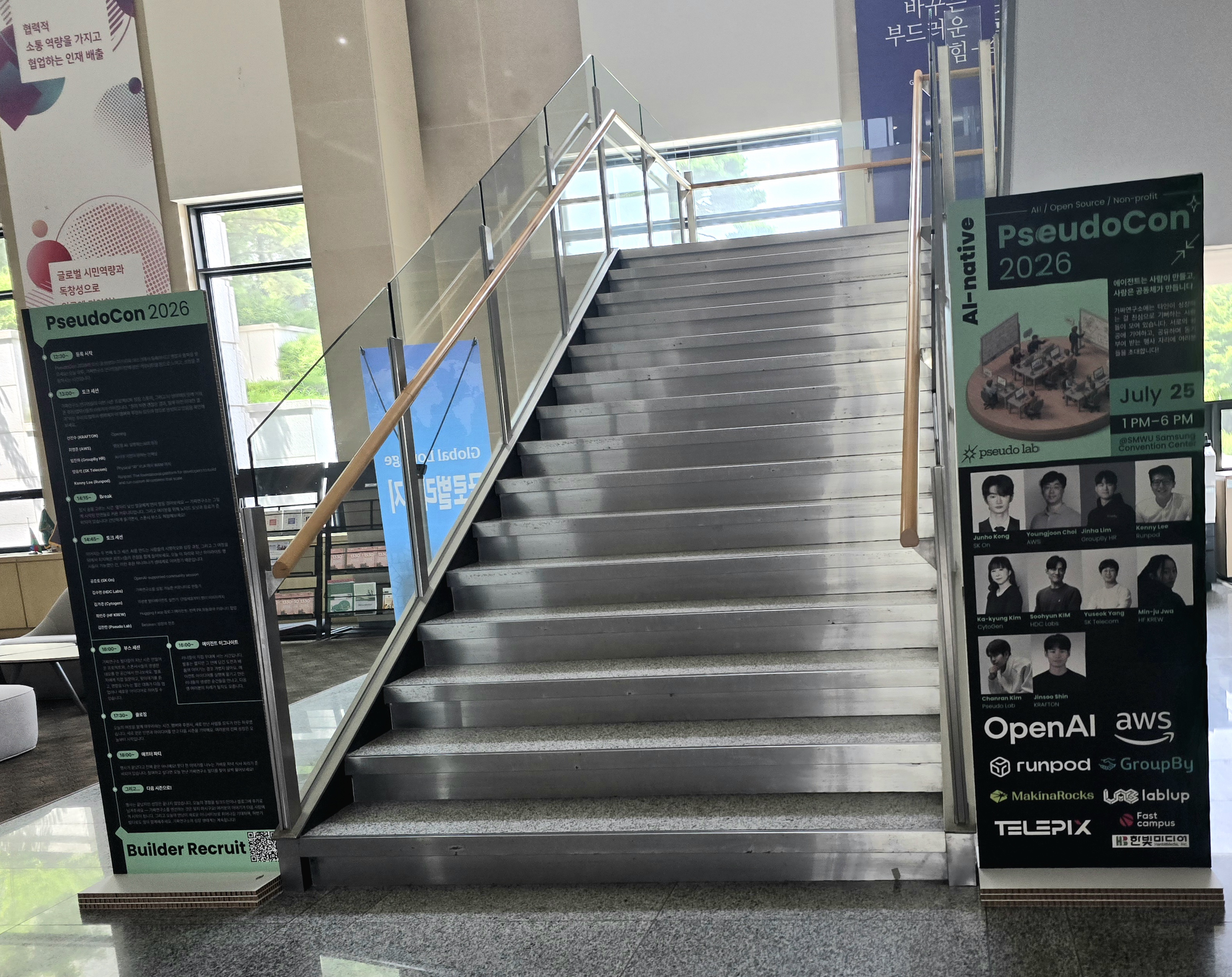
The Day’s Sessions
Looking back, what struck me most was how sessions from completely different domains converged on the same question: if AI handles execution, what should people be doing — and how do you deliberately design that boundary? Robotics researchers, a hiring platform founder, a biomedical team, agent platform developers — the framing varied, but the underlying tension was identical.
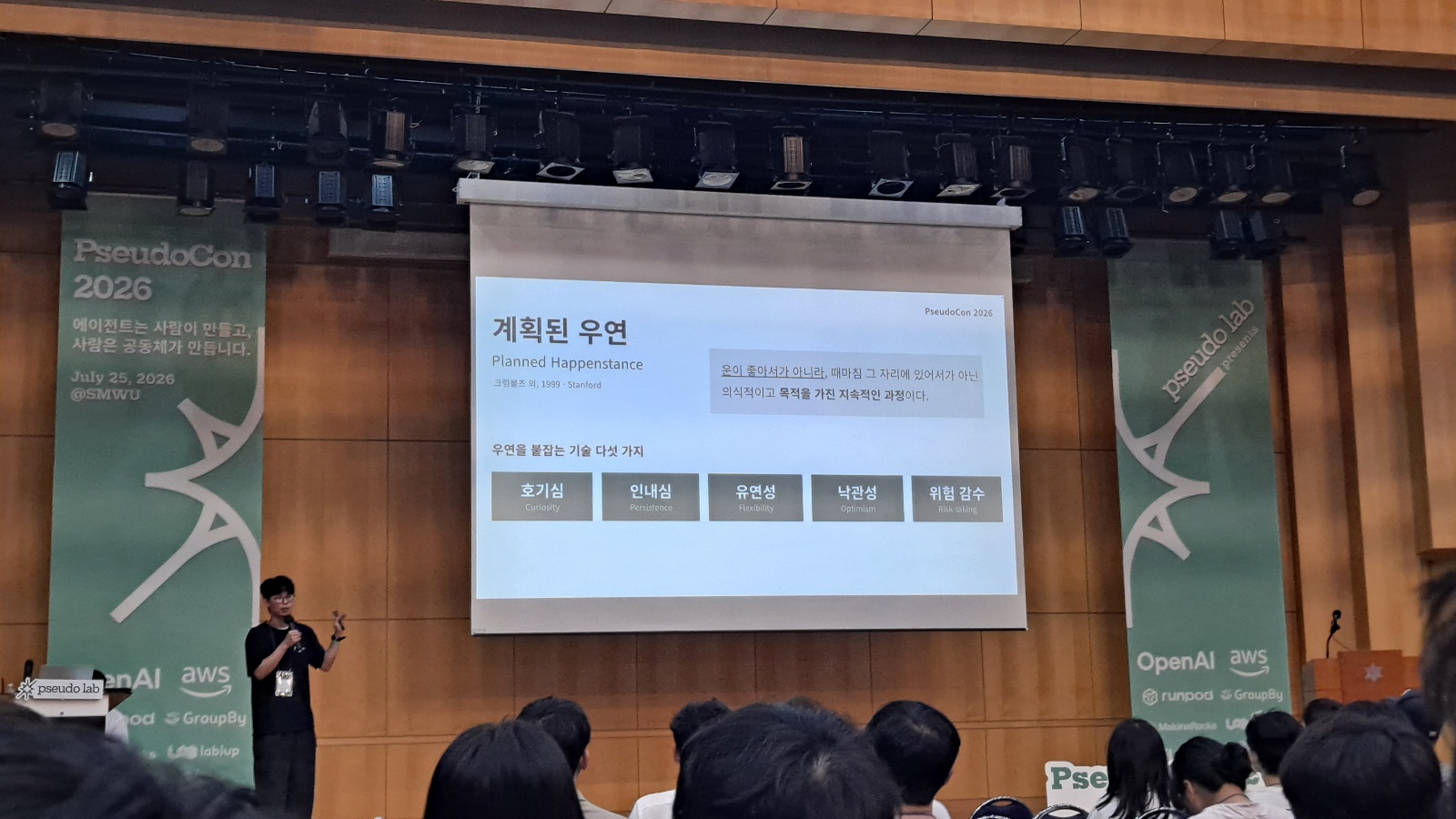
Jinsoo Shin (KRAFTON) opened the 10th PseudoCon with a message about navigating uncertainty in the AI era not alone, but by staying connected and learning with others. The phrase “Planned Happenstance” threaded through the rest of the day — career-changing opportunities feel accidental, but they tend to find people who’ve been consistently in motion. Looking back, PseudoLab and AutoBioX were exactly that for me.
Youngjeon Choi (AWS) gave the most systematic framing of the day. The shift from stateless (single request-response) to stateful (multi-step, persistent) AI is the defining transition of this period. He drew a clear line between soft guardrails (prompt-level instructions) and hard guardrails (system-level policy enforcement), arguing that agentic systems need both. The line that stayed with me: AI doesn’t replace people — it amplifies the best ones.
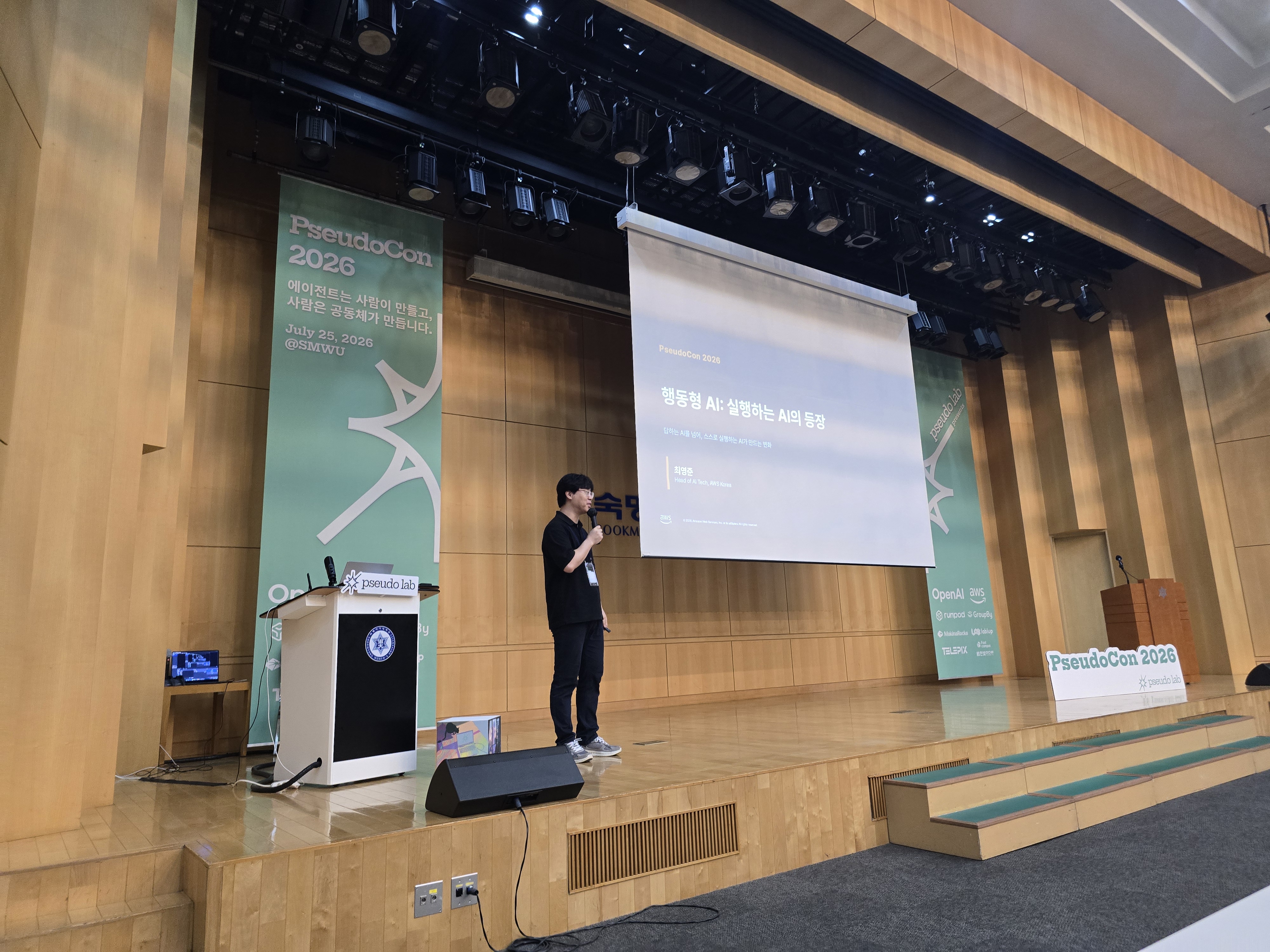
Jinha Lim (GroupBy HR) runs a hiring platform and has watched the job market shift in real time. The skill-checklist format is fading. At a hackathon with Musinsa, KakaoPay Securities, and Channel.talk, participants weren’t handed a problem — they were given data and told to find one. The scarce skill isn’t implementation; it’s problem definition. Her sharpest line: when AI gets something wrong, it apologizes. When a person makes a bad call that costs the company, someone is accountable. That accountability gap is where human judgment stays irreplaceable.
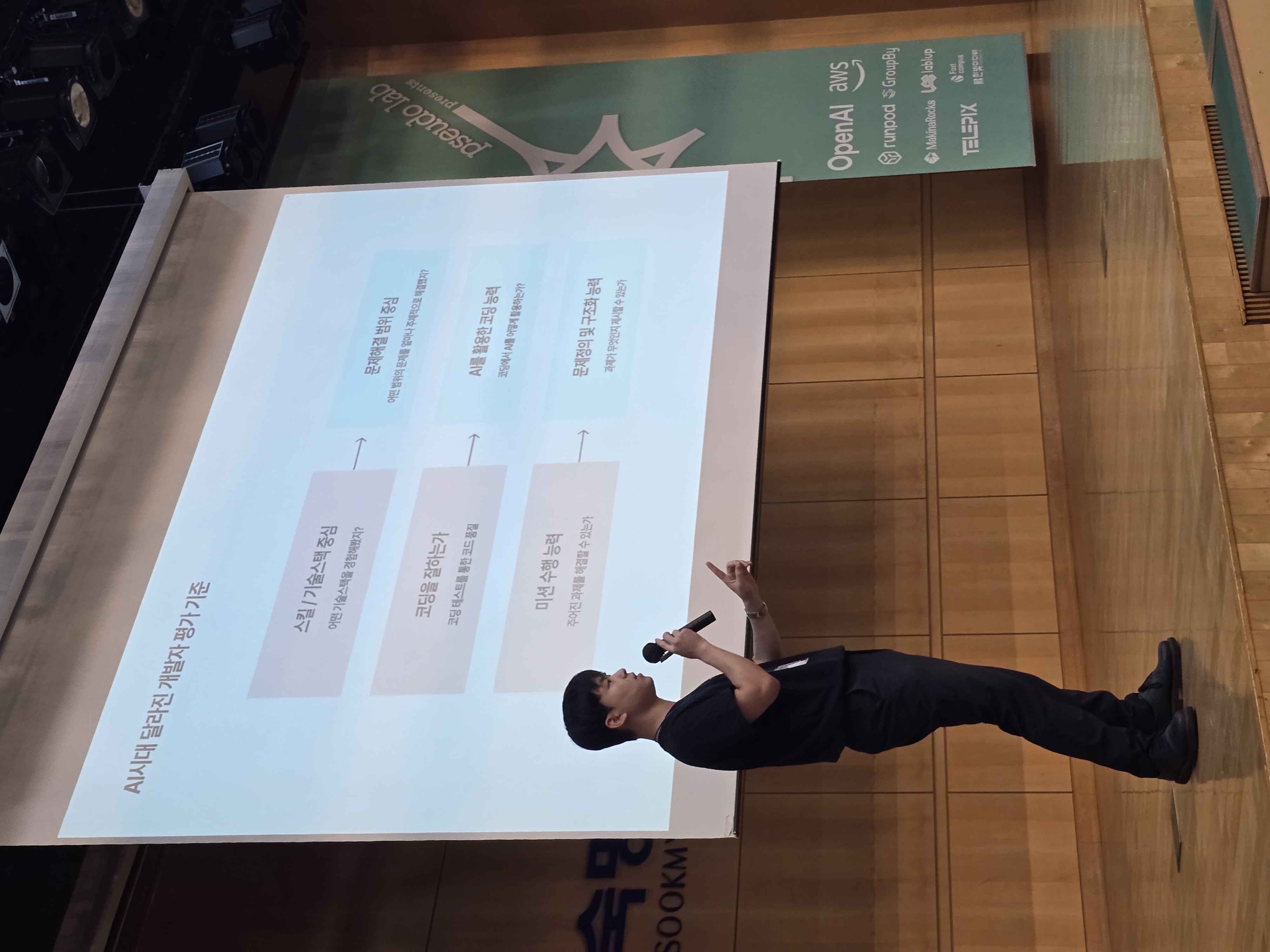
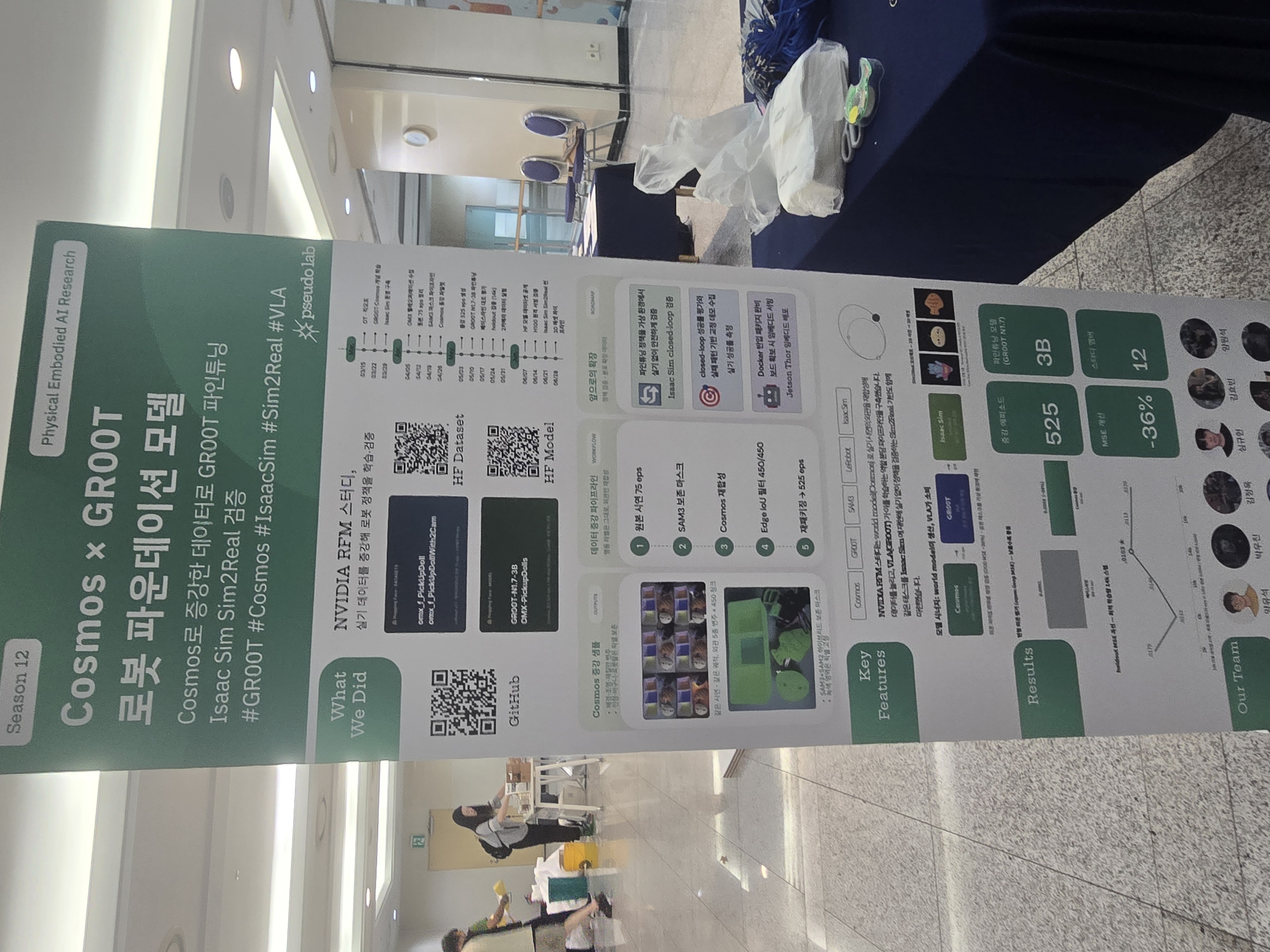
Yuseek Yang (SK Telecom) compressed the Physical AI lineage into 15 minutes: RT1 → VLA → Open VLA, tracing where the bottlenecks moved and how each generation addressed them. Flow Matching cut denoising steps from around 40 to 4. He was also honest about his own project: 36% MSE reduction via Cosmos-based data augmentation, but the robot still can’t complete the task in real conditions.
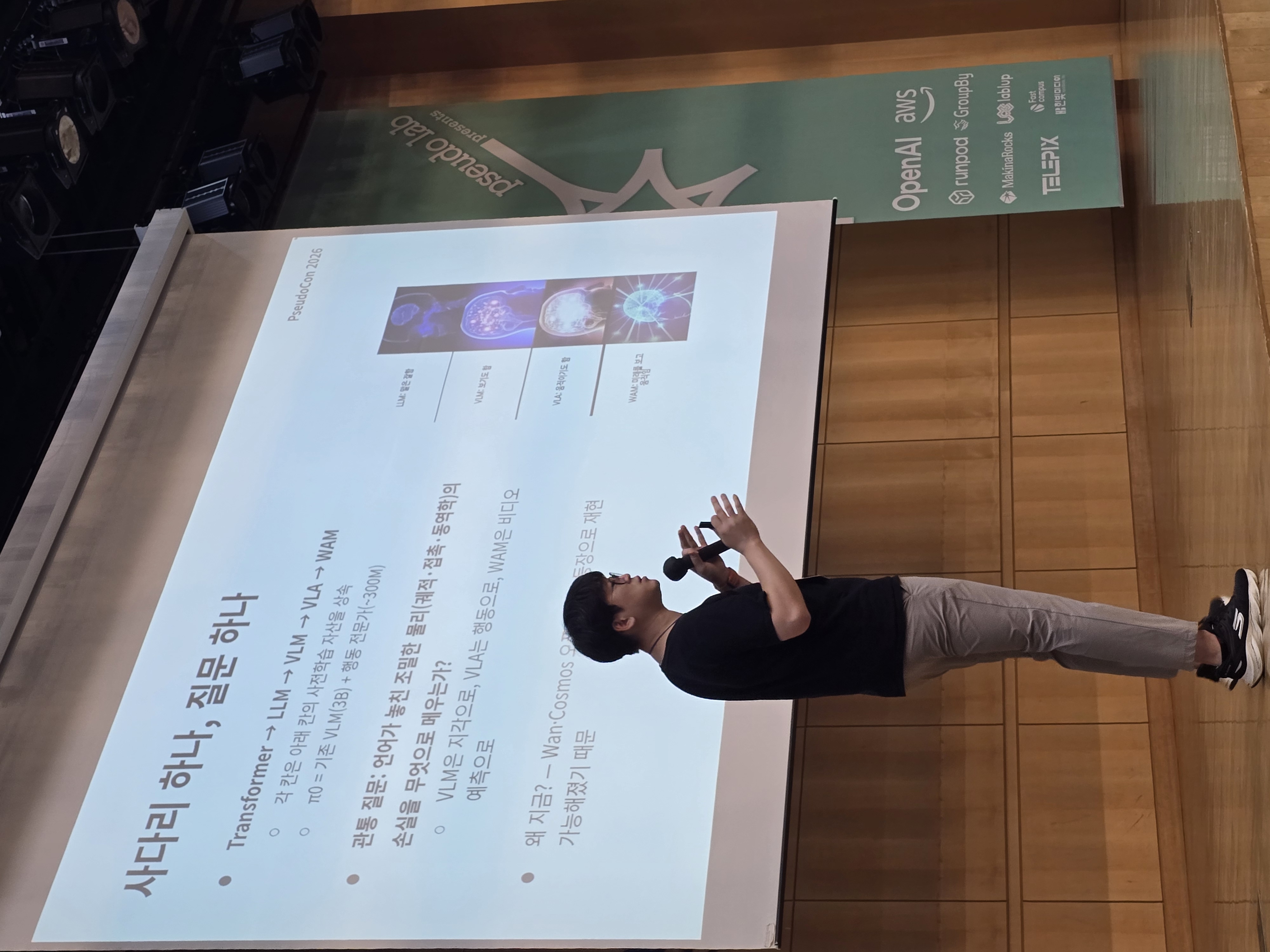
Kenny Lee (RunPod) gave the day’s only English session. RunPod started with two GPUs in a basement; the pitch is 90% cost reduction versus traditional HPC. He walked through three tiers — Pod (virtualized GPU), Cluster (large-scale training), Serverless Endpoint (production deployment) — with a live demo. The company grew through Reddit word-of-mouth, no sales team.
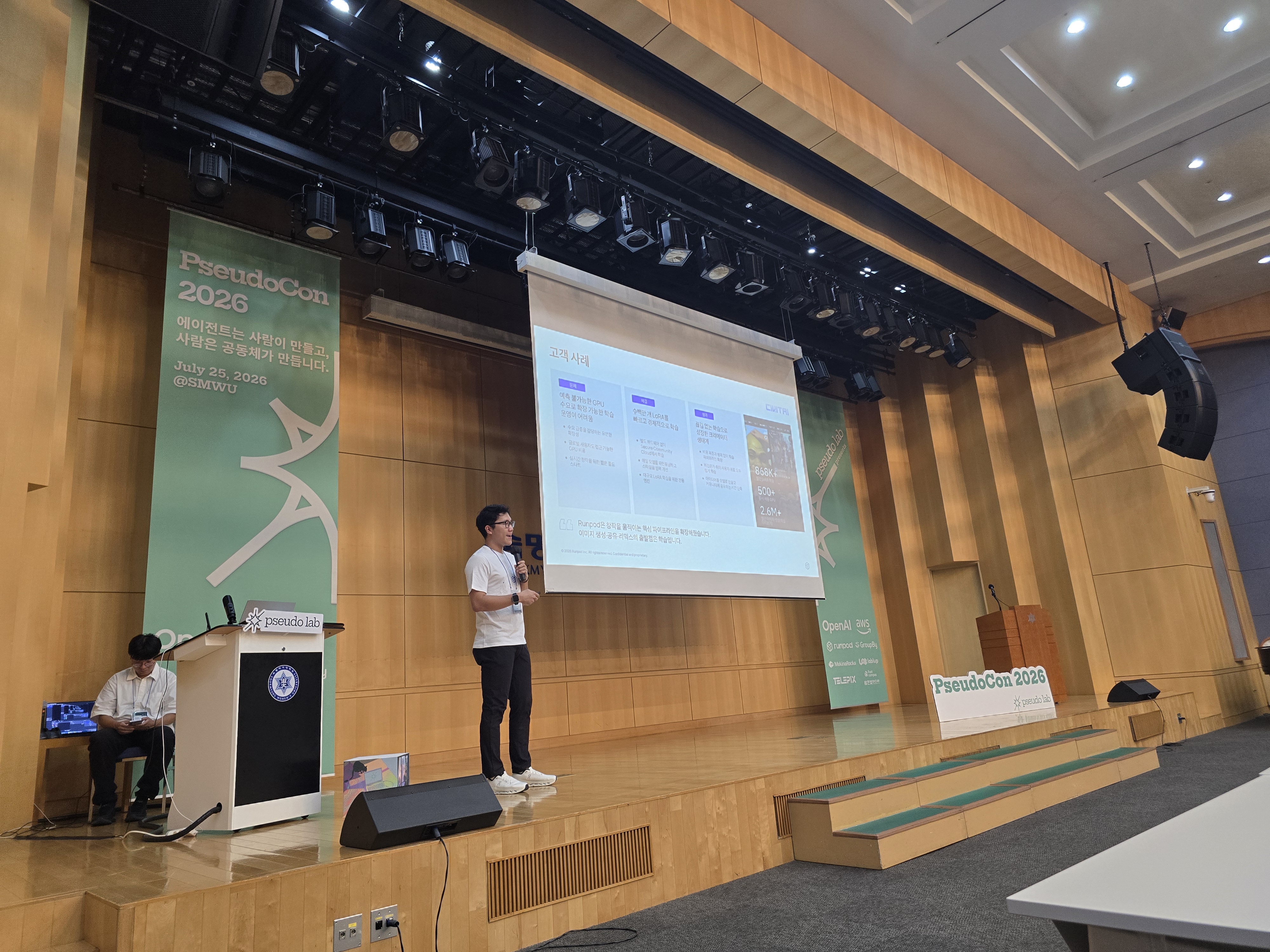
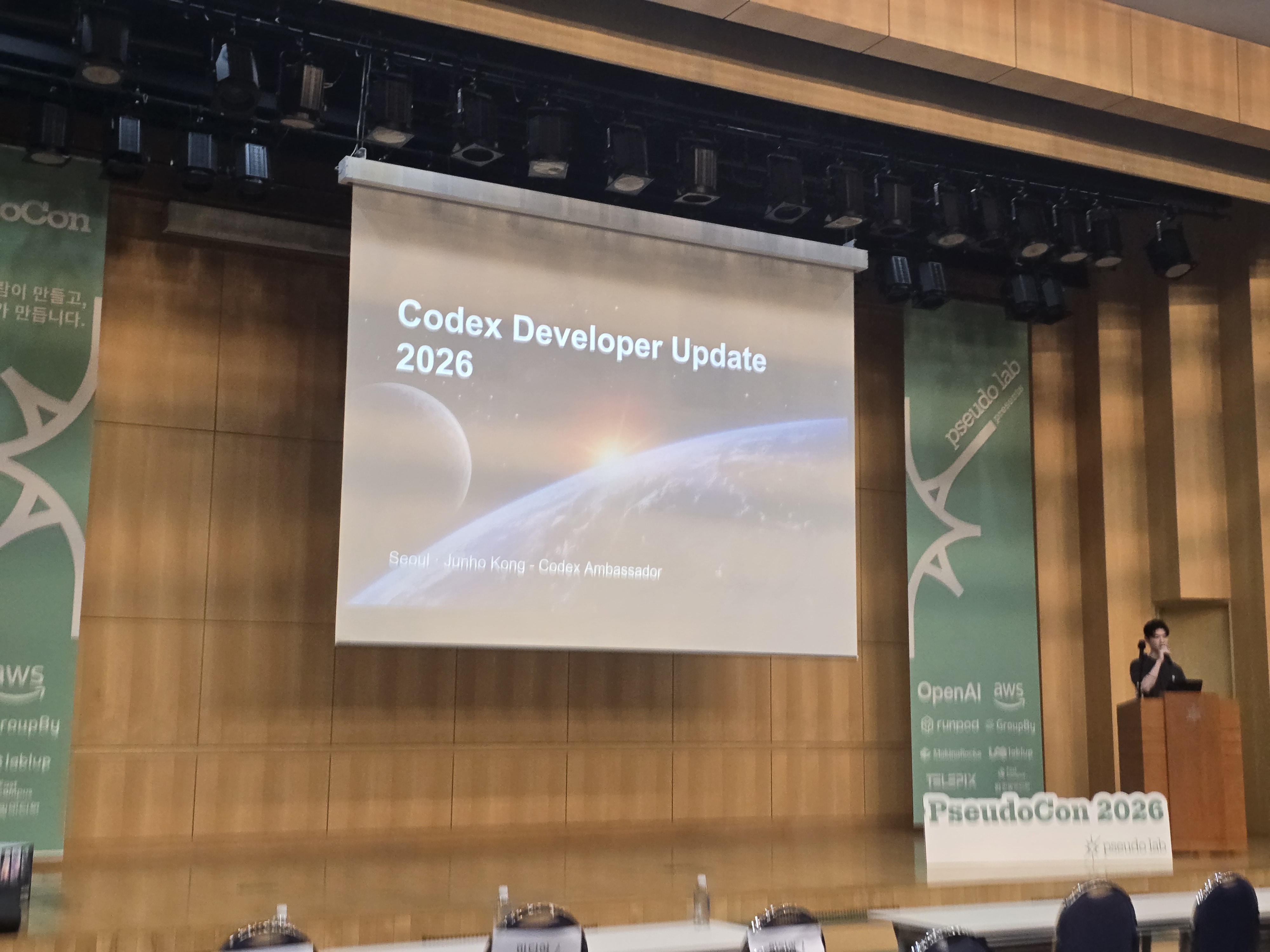
Junho Kong (SK On) walked through recent OpenAI updates in practice. GPT 5.6’s Sol, Terra, and Luna aren’t a performance ranking — they’re different tools for different contexts. He grounded Ultra mode’s parallel sub-agent execution, Sites, and Computer Use in concrete use cases. The framing shift he highlighted: from “how much code did Codex write” to “what can I actually ship with Codex.”
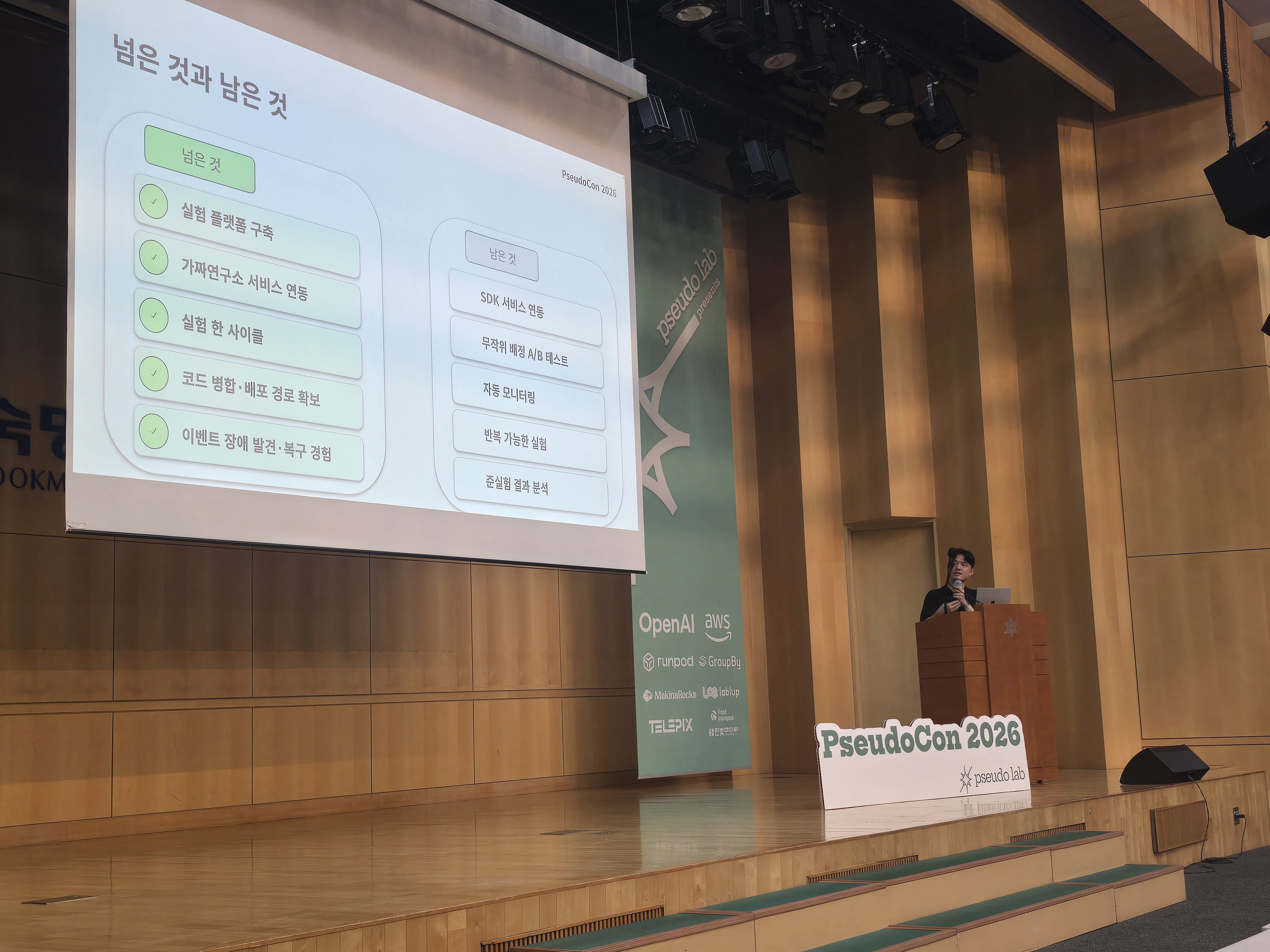
Soohyun Kim (HDC Labs) walked through the stumbles of attaching an A/B testing platform to the PseudoLab service. The key lesson: don’t start with the data, start with the question. Early weeks were spent looking for signals before locking down what success would even mean. She also brought real incidents to the stage: a 60-hour data outage in the first days of an experiment, a one-month bottleneck from PR merge to deployment. Her conclusion: an experiment platform alone isn’t enough — you need the full loop of deployment, monitoring, and incident recovery.
My Talk
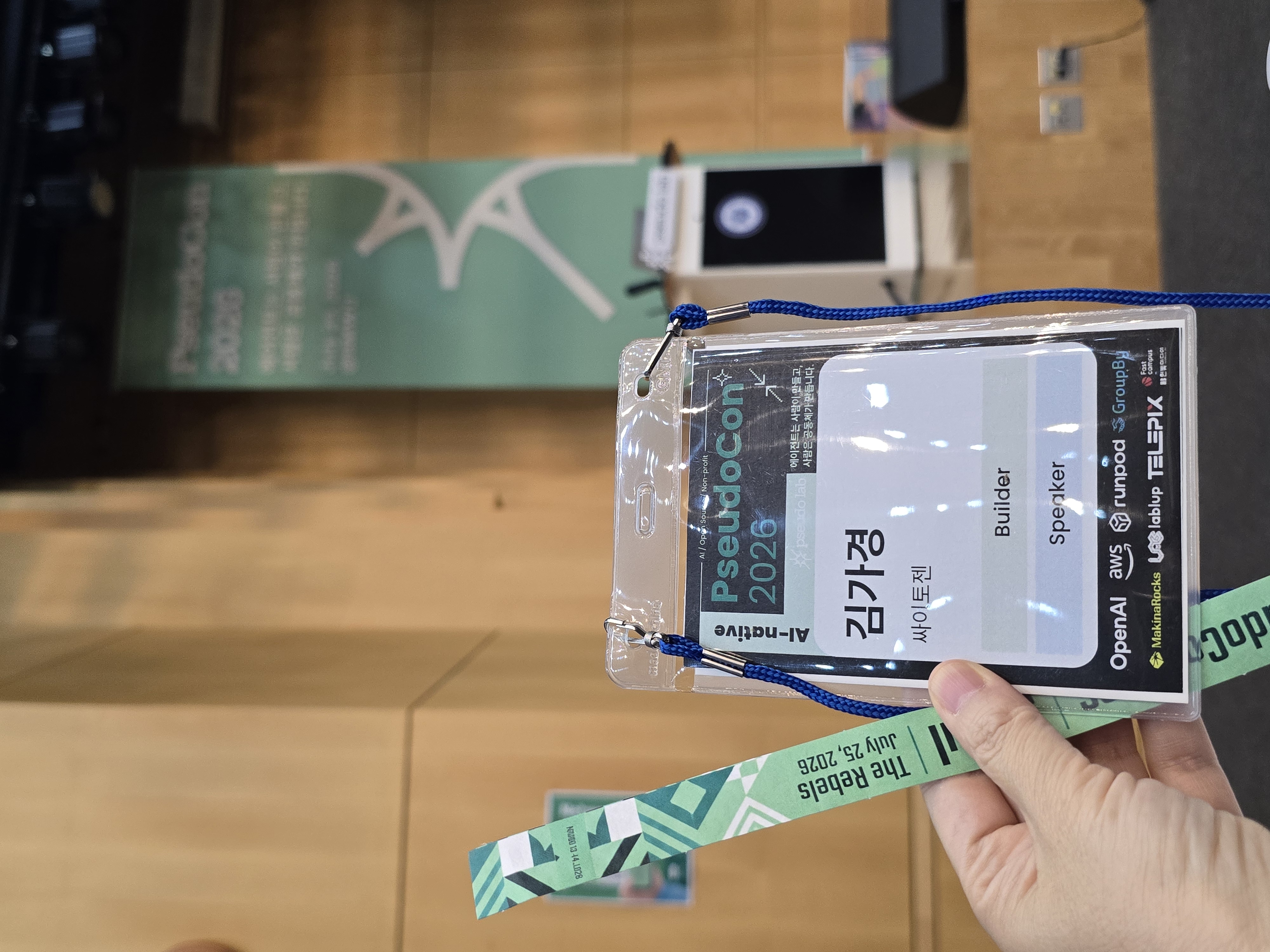
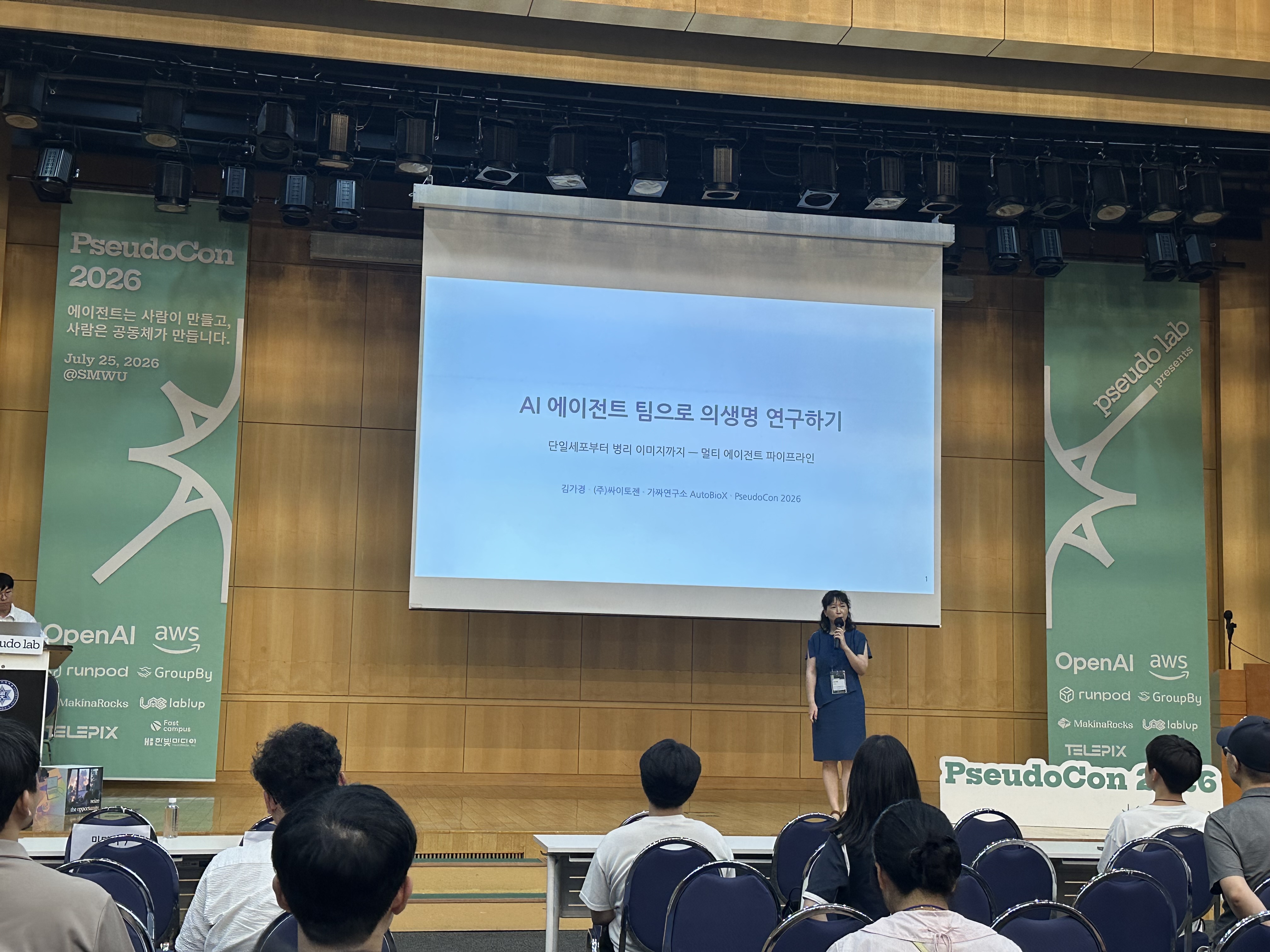
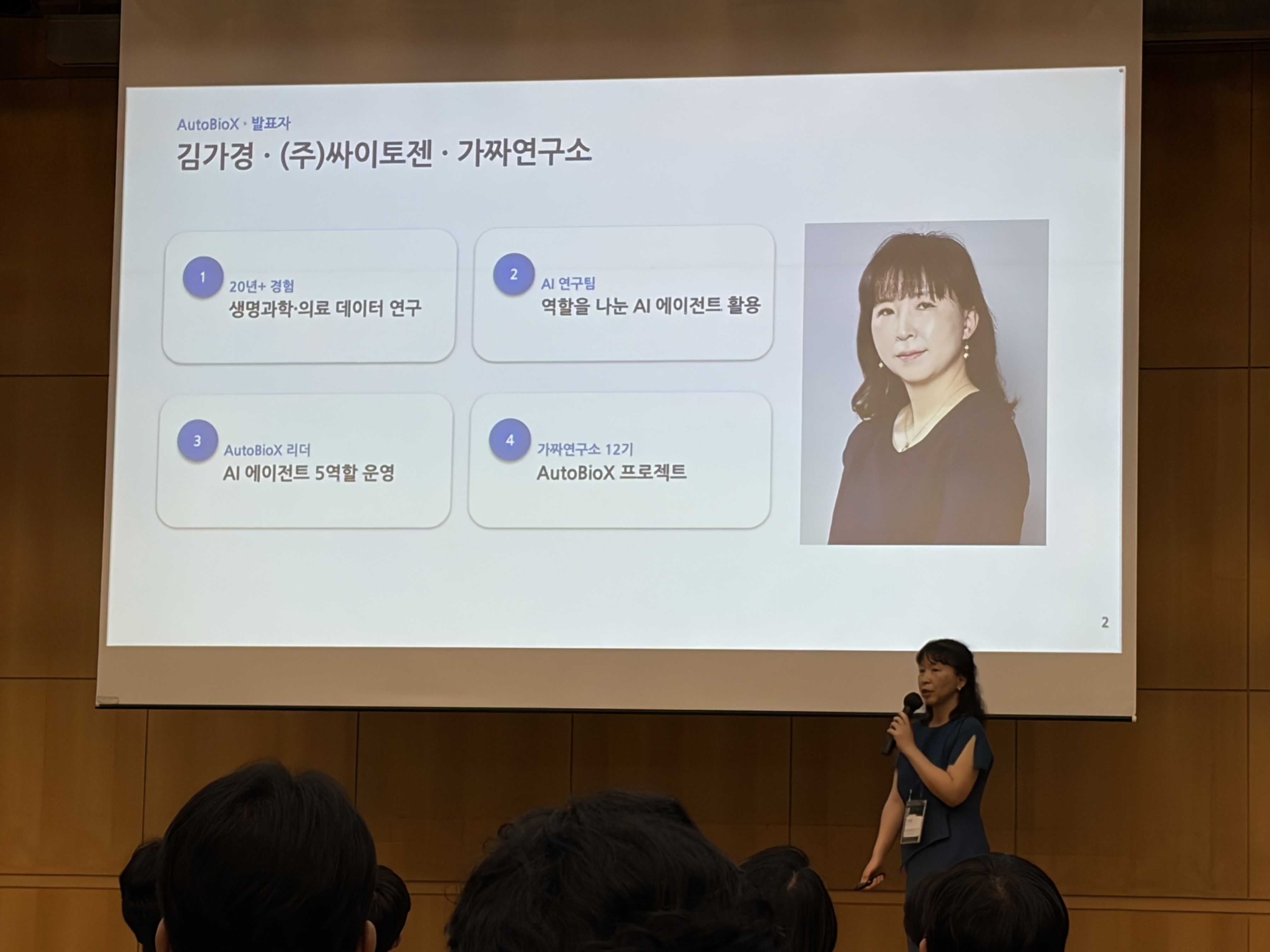
I presented third in the afternoon block, with the title “Multi-Agent Research in the Wild: From Single-Cell to Pathology Images.”
This wasn’t a talk about what AI can do in biomedical research. It was closer to the opposite: what does it actually look like when AI gets attached to research — where does it work, where does it fail, and where does a person still have to step in?
I started with the known limitations of AI scientists. Reproducibility success rate of 1.8%, code failure rate of 40% — these numbers are already in the literature. AutoBioX tried to address them through a multi-agent structure: separate agents for planning, summarization, prediction, verification, and literature search, cross-checking each other. Humans focus on direction and final judgment; agents handle execution.
The single-cell project was a chromatin multiomics study of human hematopoietic stem and progenitor cells. Our original target — a chromatin-to-transcription lag metric — came back at Spearman 0.04. Essentially zero. But a transcription velocity measure (α) that emerged through AI-assisted analysis held consistently at 0.82–0.88 across different methods. The signal we weren’t targeting turned out to be the more robust one.
What I consider the more important result isn’t that we found a new metric. It’s that we didn’t trust an untrustworthy result, and we were able to discard a failing hypothesis rather than rescue it. That discipline is itself a research output.
The pathology imaging project predicted molecular markers (ER, PR, HER2, PAM50) from H&E breast cancer whole-slide images. The picture was more complex than expected. Image-based prediction is sufficient for ER and PR. HER2 still needs molecular confirmation. PAM50 subtypes are predictable from images, but using those predictions directly in treatment decisions is a separate question. The key line from the talk: “‘We can predict it’ and ‘it can replace the existing test’ are entirely different claims.” What we built was closer to a treatment decision map — where AI can be used, where existing tests are still required, and where judgment should be withheld.
We kept numbers off the slides. The validation gate isn’t closed yet, so we stuck to methods and principles.
We Put Failures on the Slides
There was one deliberate choice about what not to hide: the failures and the false starts.
The initial metric failed. A GPU server had a physical hardware failure. A key team member left, leaving a gap in the workflow. Storage I/O bottlenecks meant expensive GPUs were sitting idle.
I think all of that is part of the research. In practice, results rarely come out clean. Knowing what failed is how you do better next time; knowing where the bottleneck was is how you fix the system. We audited before large tasks, automated repetitive work, routed around the storage bottleneck with SSDs, and kept redesigning the split between what agents handle and what people handle. Those failures turned into assets — automation and a clearer sense of where human judgment belongs.
If PseudoLab is a community where people put failures on stage to learn from them together, AutoBioX wanted to be part of that.
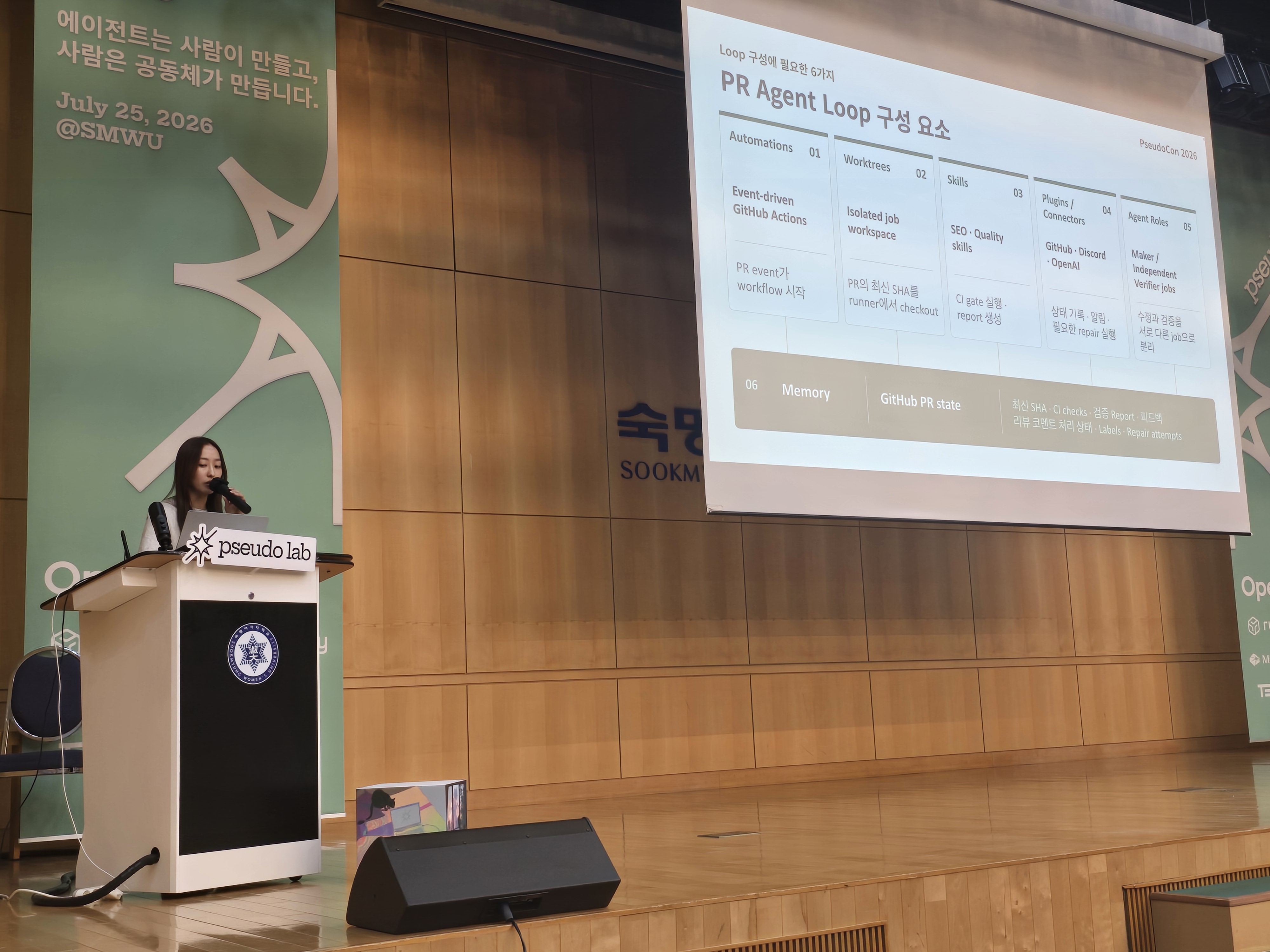
Minjoo Jwa (HF KREW) automated the Hugging Face English blog pipeline: translation, quality review, SEO, and PR review, all running as an agent loop. When a translation commit lands, SEO and quality skills run in parallel; their reports become PR comments; the PR agent reads the CI logs and decides whether to revise. GitHub PRs double as the agent’s state memory. The concept she introduced — “loop engineering” — is about designing how long and how many cycles to run, not just what to prompt.
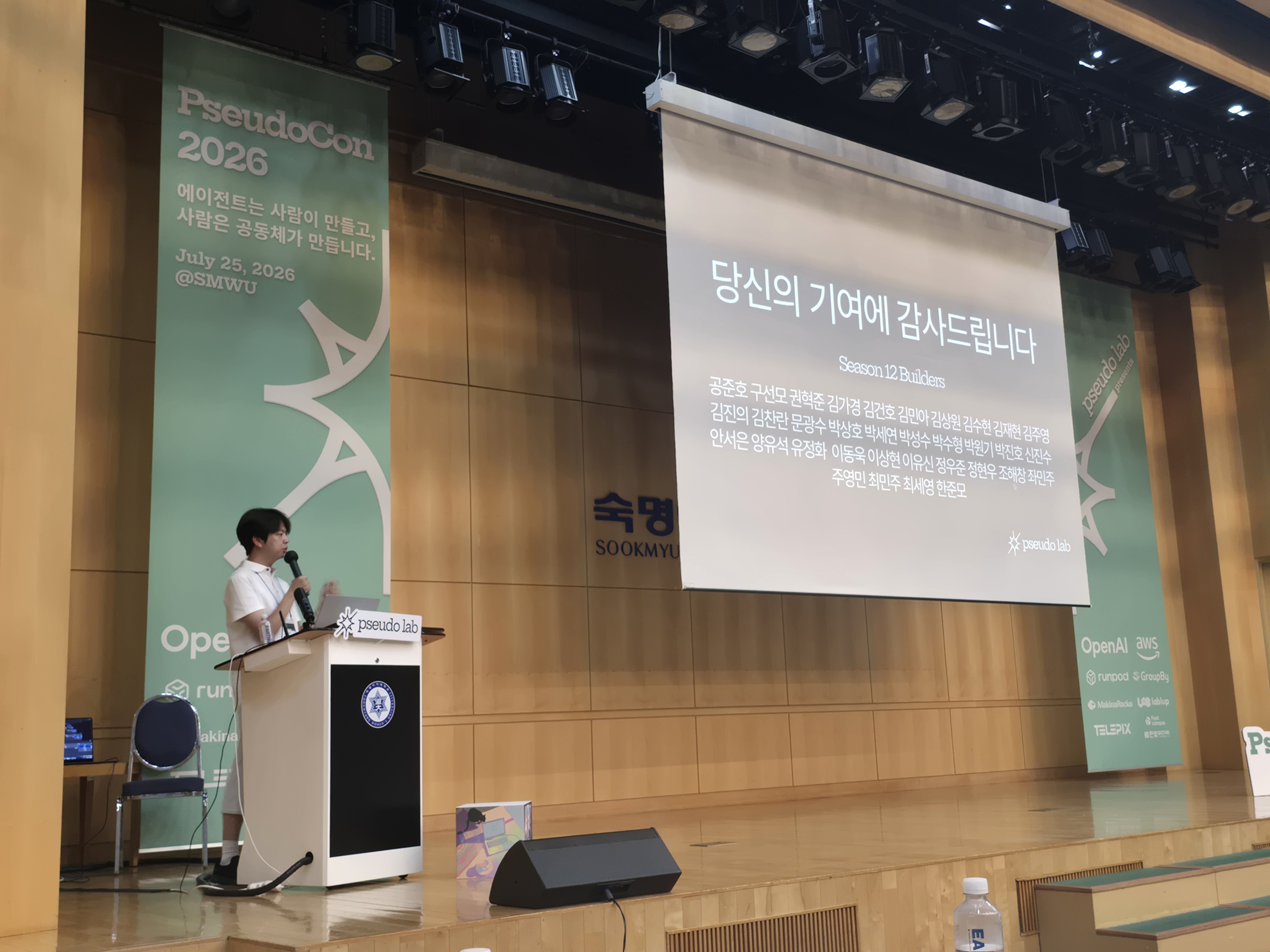
Chanran Kim (Pseudo Lab) — speaking as part of the organizing team — closed the main sessions with Betoken: “just as a token predicts what comes next, small contributions and connections can be early signs of growth.” Partnerships with NVIDIA, OpenAI, and others traced back to individual contributions that started without expectation of return. PseudoLab itself is the evidence, and so was the work the Season 12 builders had just put on stage.
The Agent Ignite session had several short talks. Here are the ones I caught, in the order I heard them.
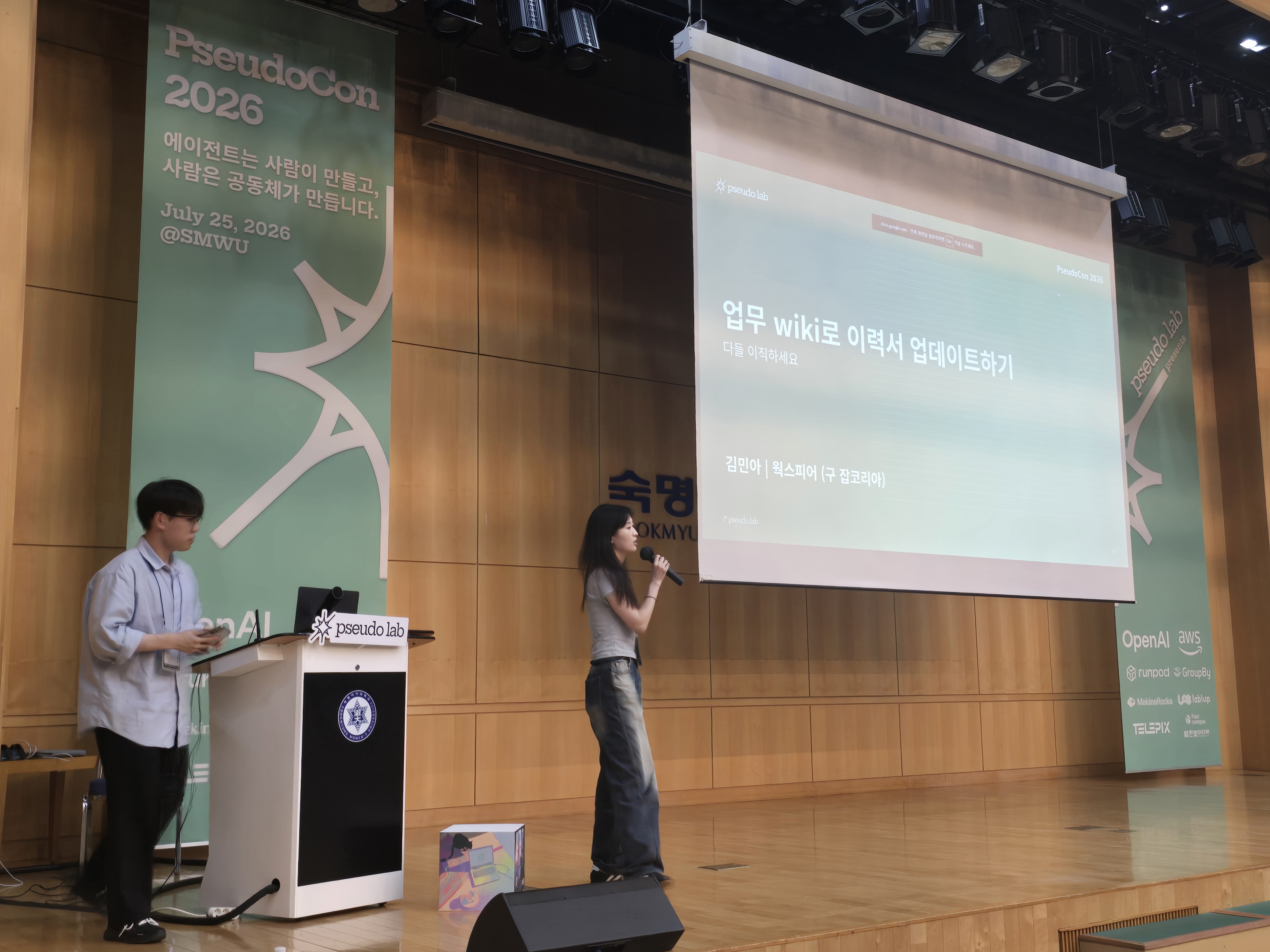
Mina Kim (Worksphere) built a work wiki agent that structures scattered Slack and Notion entries into a résumé draft. She was honest about where it breaks: structuring and cleaning is one thing, but trusting the output is another. Her closing line — “the bottleneck was myself” — landed.
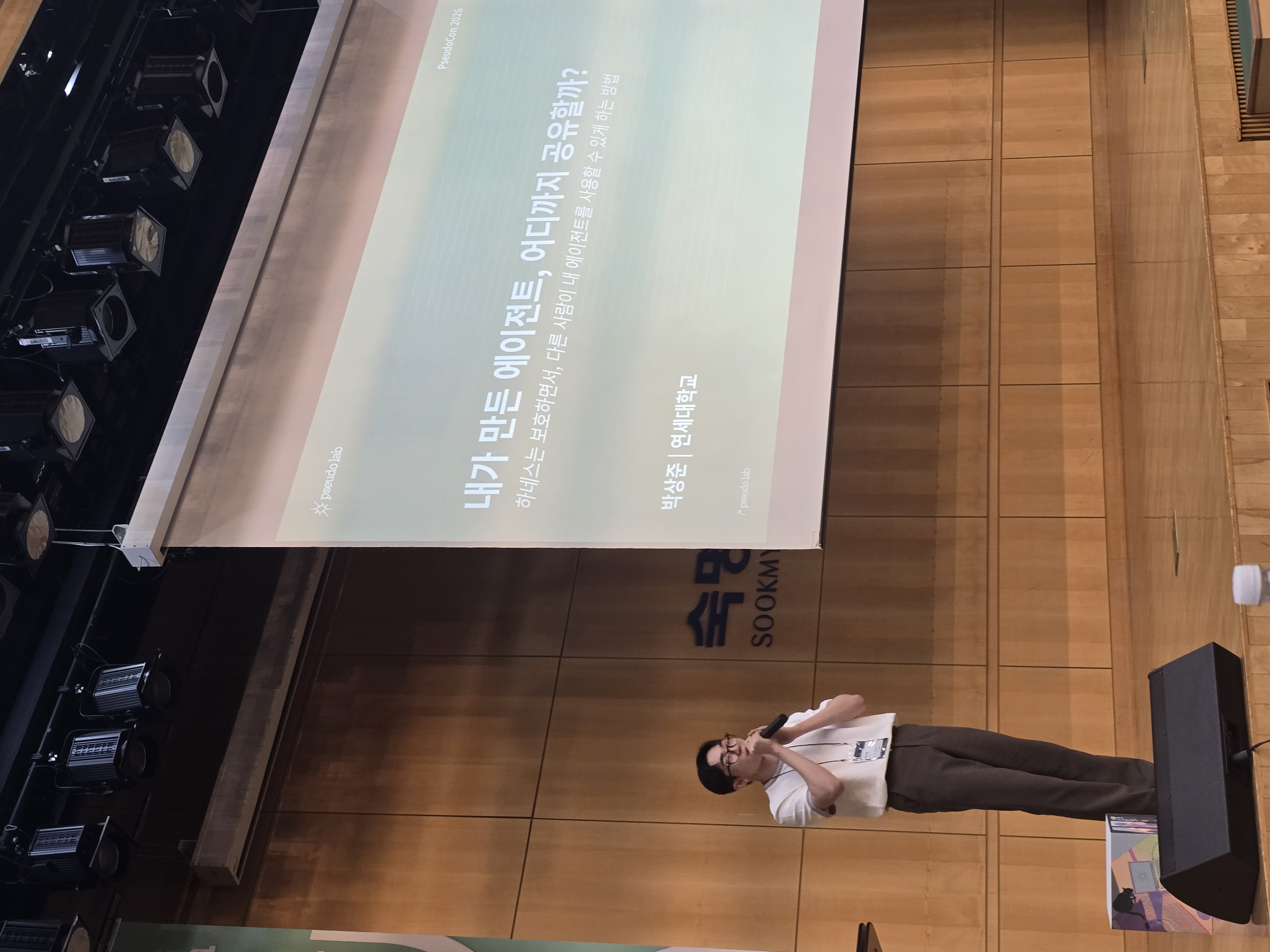
Sangjun Park’s Hyam distributes agents as encrypted packages — the harness stays private, only results are shared. When a demo tried to extract the internal structure, the verification logic refused directly. Sangjun is also an AutoBioX team member, so watching a teammate take the Ignite stage separately was its own kind of moment.
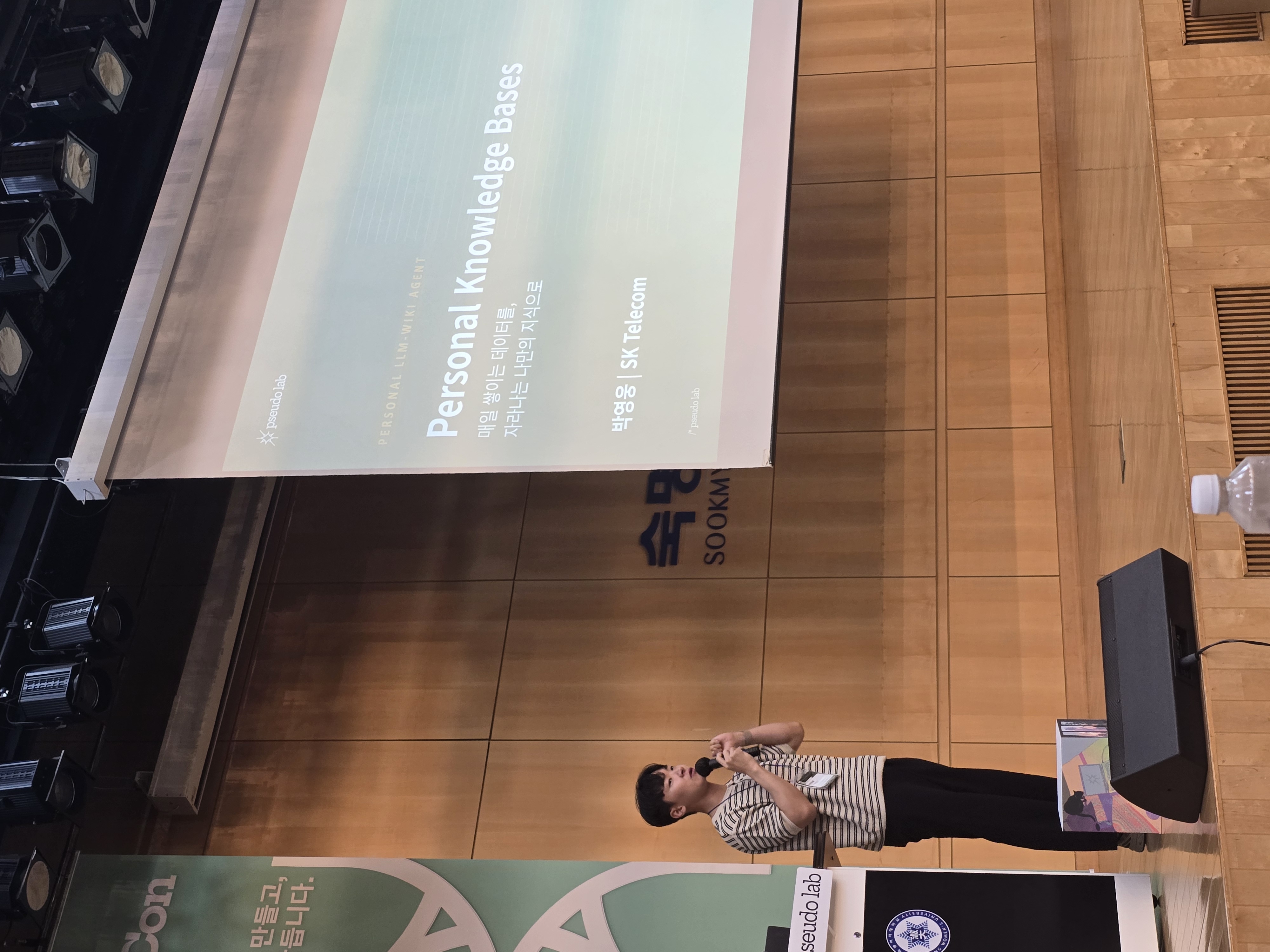
Youngwoong Park (SK Telecom) built a Personal LLM Knowledge Base connecting Obsidian, Confluence, and Slack into a continuously compiled knowledge graph — closer to an always-on wiki than a retrieval system that fetches on demand.
PseudoLab is a voluntary learning community of AI/ML researchers, developers, and practitioners who form project teams each season. Alongside the talk sessions, Season 12 teams ran project booths. I was part of two teams this season: AutoBioX, and an experiment platform team focused on running actual A/B experiments within the PseudoLab community, where I worked as a data analyst. The experiment platform team staffed their booth for four hours that day — I was deep in presentation prep and couldn’t make it over, which I regretted.
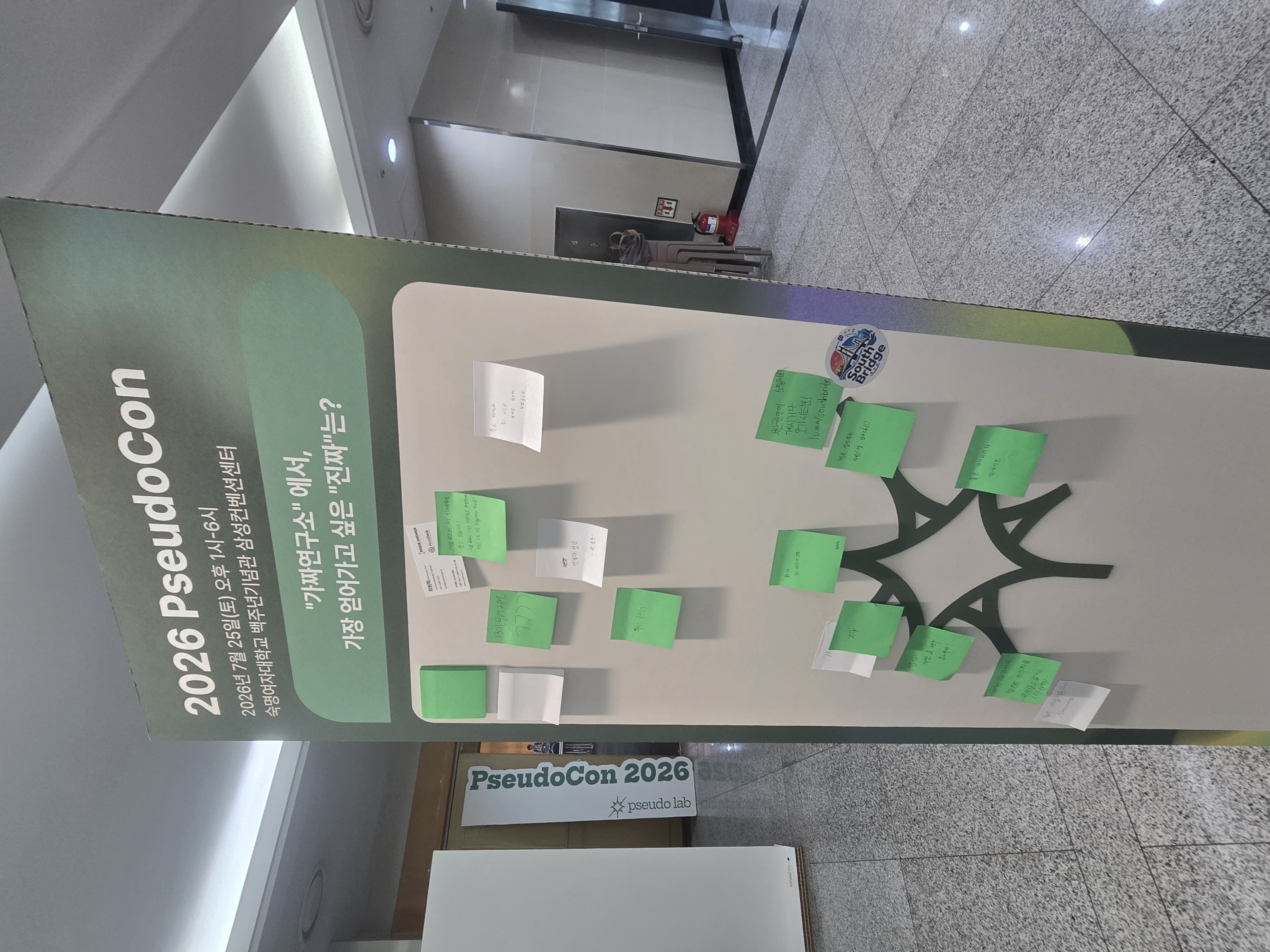
One corner of the venue had a board with the question: “What’s the one real thing you want to take away from PseudoLab?” Post-its in every handwriting, each a different answer. That board probably captured the community better than any slide.
After the Conference
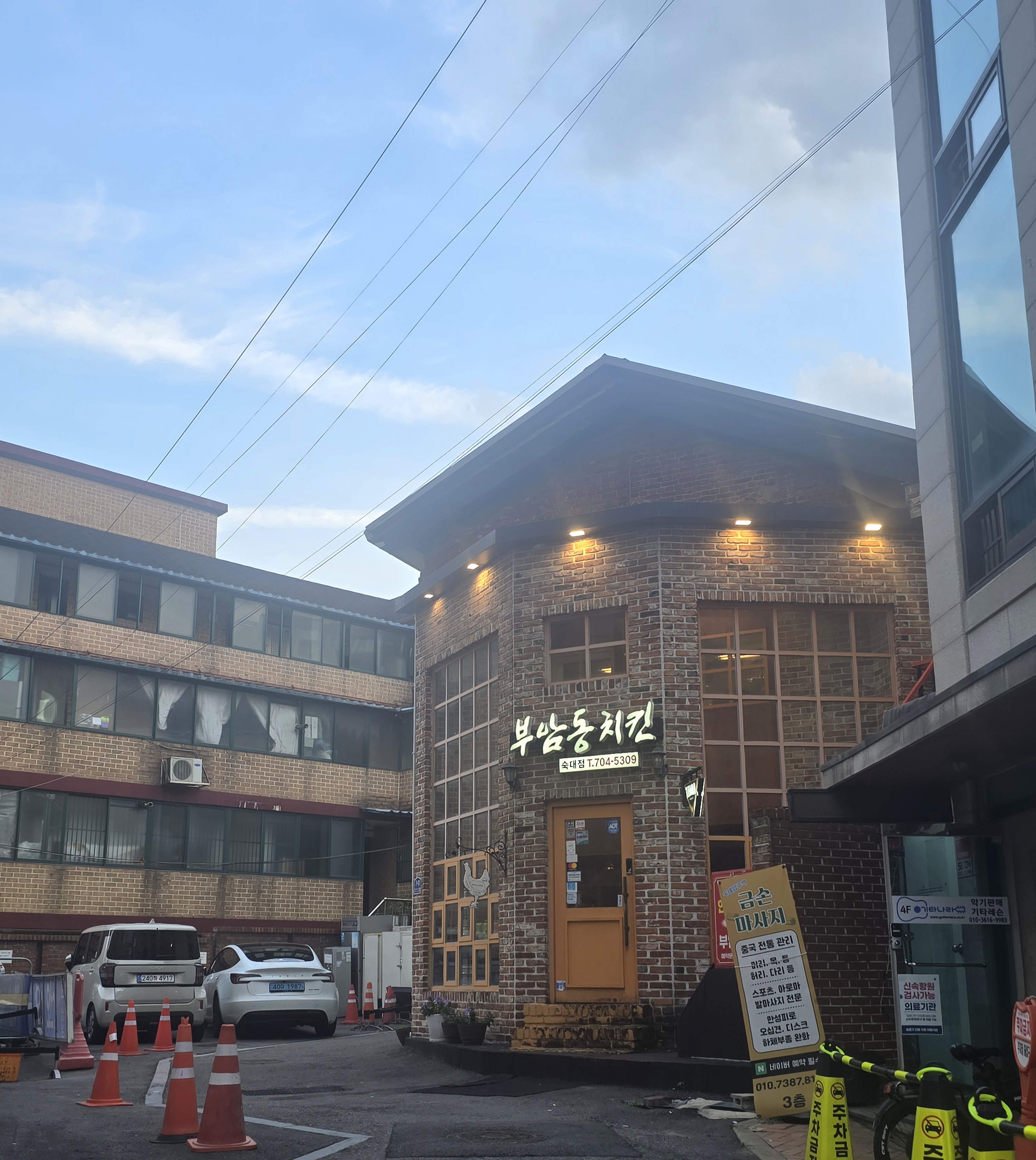
The afterparty was a different kind of conversation. Some people I already knew — we finally had time to talk properly. Some I’d only seen at a distance before; this was the first real exchange. Some I’d only ever interacted with online and was meeting in person for the first time. The presentations created a shared context that made it easier to get into the actual substance faster.
The Next Question
Looking back at the two projects, what’s interesting is that they point toward the same question. The single-cell project looks at change over time. The pathology project looks at what’s visible right now. Connect them, and you might be able to see how treatment resistance develops with much more resolution than is currently possible. Not a finished answer yet — but the next question I want to work on.
Presenting before the papers are done meant sticking to methods and principles rather than results. That’s the standard we set: numbers stay private until the validation gate closes. The papers will be finished before the next event, not at it.
As I wrapped up this research, I found myself more interested in what happens after: open-sourcing the work, turning it into reusable knowledge, and making it accessible rather than just published. That’s the direction I want to keep moving in, alongside exploring new problems.
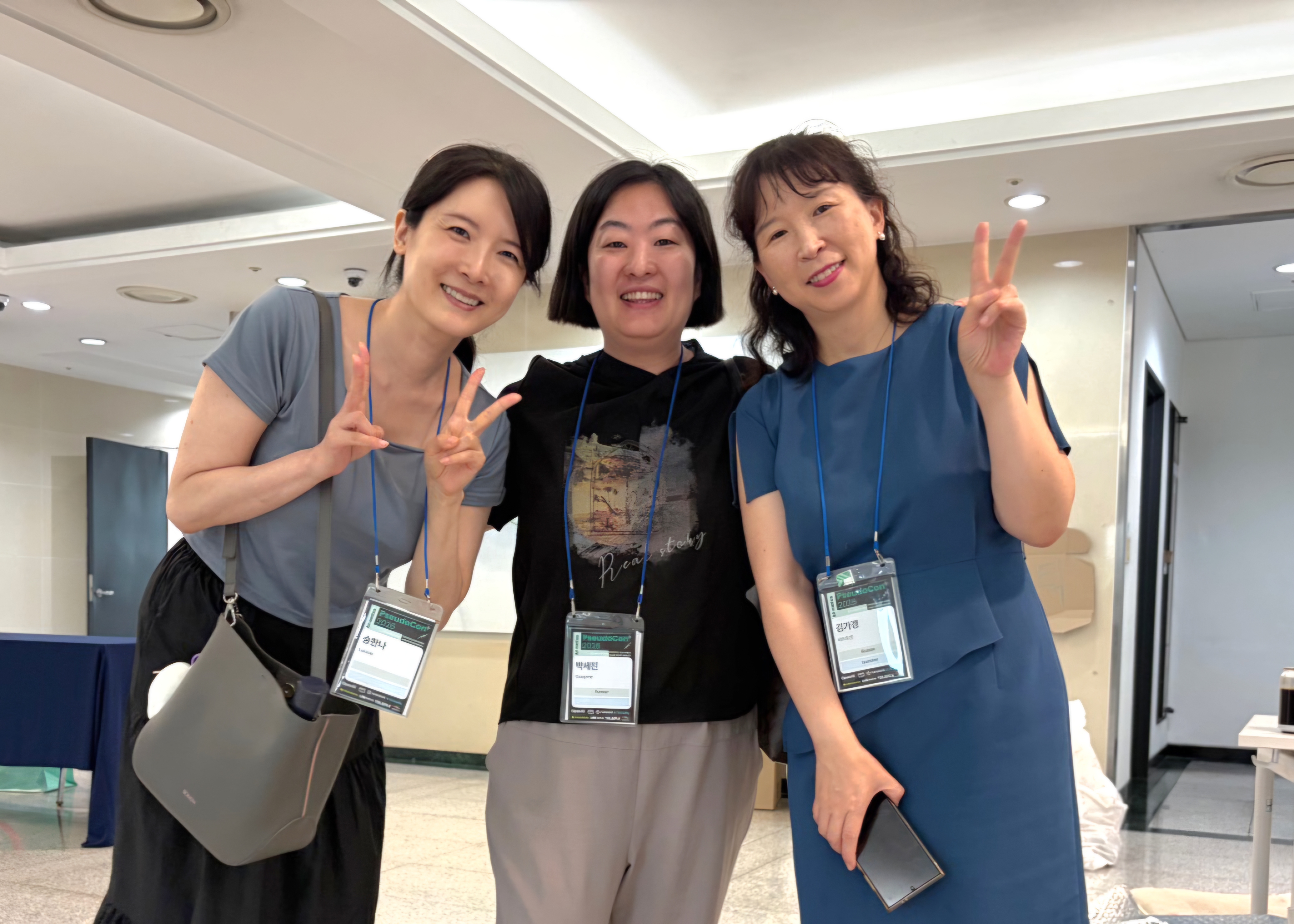
Thanks to AutoBioX team members Yongki Ji, Sejin Park, Jeonghan Seo, Jaemyeon Ryu, Geonkyu Lee, and Sangjun Park.